you don't really need words to laugh and enjoy a speechless movie by Charlie Chaplain
Thursday, April 16, 2015

Theatre
The Black Box Theatre: Experimental Theatre
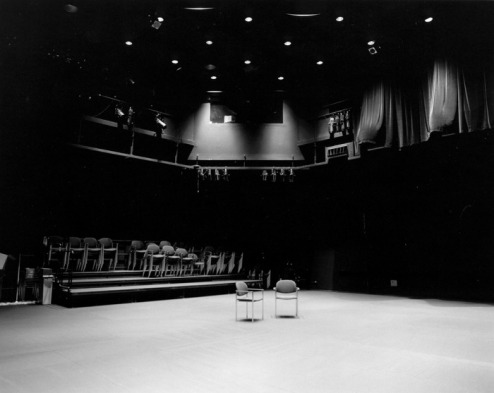
The black box theatre is a space that is flexible in seating and allows the director and design team to create the space as they would like too. The black box space is a room usually shaped in a box style, the walls are painted or draped in black and seating is definitely not permanent. In this space the floors and walls can be painted to reflex what is the desired need of the play. The dimensions of the black box can vary tremendously, I have seen large spaces to a small initimate space, either way the space allows for an initimate setting where the audience is close and almost feels like they are a part of the show. In the black box theatre the above theatrical stages can be easily reproduced, as the black box can be thought off as a blank canvas. In the black box/ flexible space, the director depending on the effect that he or she wants to have on the audience can create a stage that is theatre in the round, thrust, or proscenium. Building a set, using drapery, platforms and etc will help to create the space desired.
Friday, April 10, 2015
Vodou drumming and ceremonies are inextricably linked in Haiti. While drumming does exist in other contexts in the country, by far the richest traditions come from this distinctly Haitian religion. As such, before one can come to play, appreciate, and understand this music one should view it in its religious context. Haitian Vodou is a henotheistic religion, although viewed by many Haitians as a cultural practice, widely practiced in the country of Haiti. Vodou as practiced in urban centres in Haiti and some cities in North America (especially New Orleans) is a ritualistic faith system that involves ceremonies that consist of singing, drumming and dancing. While certain aspects of this religion may share the same roots, it is completely contrary to the stereotype of black magic, witch doctors, pins in dolls, and zombies portrayed by New Orleans style Voodoo (a bastardization of the name).
The many thousands of African slaves who were transported to Haiti in the 17th and 18th century were forbidden to practice their animistic religions and were forced to accept the Catholic Church. Over time, they disguised their belief in many gods or spirits by assigning Catholic saint names to each one of them, so they could tell their oppressors that they were worshiping saints. A similar process occurred with the slaves of Cuba who created the religion of Santeria. In fact, Candomble in Brazil, Obeayisne in Jamaica, and Shango in Trinidad were all examples of this religious transformation. Even though Haiti became independent during a slave uprising in 1804, (the only successful slave revolt in modern history), Vodou continued to be practiced in different ways by different communities around the country. It remains the most prominent religion in the country to this day.
Friday, March 27, 2015
Friday, March 13, 2015

James Mercer Langston Hughes was an American poet, social activist, novelist, playwright, and columnist. He was one of the earliest innovators of the then-new literary art form called jazz poetry. Hughes is best known as a leader of the Harlem Renaissance. He famously wrote about the period that "the negro was in vogue", which was later paraphrased as "when Harlem was in vogue".
Friday, February 27, 2015

Friday, February 20, 2015

Subscribe to:
Posts (Atom)